The EA Platform
Assessment, monitoring, and methodology-driven development — for individual athletes, teams, organizations, and institutions. EA designs the system. The prescription is the product. Training, when it exists, is premium and intentional.
“Tomas is a rare find. He has both extraordinary knowledge and an absolute commitment to the health and betterment of his clients. Spend 15 minutes with him and you will see this to be undeniably true. I gladly give him the highest recommendation.”
— Tom Efinger
Individual Athletes · Premium
For individual athletes who want the full EA platform experience — clinical-grade assessment, Better Athlete monitoring, and a prescription-driven development plan. Premium coaching at EA is available for select athletes whose profile, goals, and commitment align with what this level of attention requires.
Years coaching adult athletes across every sport, fitness level, and decade of life — from first-timers to elite competitors.
The goal isn't just looking fit — it's being ready for the moments that matter. A last-minute surf trip. A ski weekend. A soccer league. The playground with your kids. Prepared for the best in life.

Every Rep.
Every Session.
Built Around You.
The Process
An honest conversation about who you are — athlete, team, or organization — what you're building, and how EA can help design it. No commitment. Just clarity about whether the fit is right.
Clinical-grade assessment at the appropriate tier — from a group Tier 1 baseline event to a full Tier 4 sport-specific battery. This is the objective data layer that every prescription is built from. No guessing.
EA authors the prescription: injury prevention protocols, strength and conditioning progressions, recovery programming, and a re-assessment timeline. Specific to this athlete's data. Actionable by the athlete, their coach, or EA directly.
Implementation follows the prescription and the context. For individuals: premium coaching at EA, or self-directed with EA support. For teams and organizations: coach-led with EA methodology, or EA-facilitated with partner practitioners. EA designs — execution follows the right path.
Re-assessment at 6–8 weeks measures real, objective change — the same clinical tools, the same protocol. The prescription updates based on findings. Better Athlete monitoring tracks development between assessments. The system keeps improving.
The goal is not a program cycle — it is a longitudinal record of athletic development that gets more valuable over time. Annual Tier 1 re-screening, seasonal programming updates, and ongoing Better Athlete monitoring create a platform that grows with the athlete or organization.
Recovery & Longevity · All Athletes
Most performance culture pushes harder, faster, more. Everyday Balance® pushes back. Designed for athletes who want to perform, recover well, and stay healthy for the long run — this program integrates training load, recovery programming, and Better Athlete monitoring into a system that builds longevity rather than burning it.
Training and recovery are two sides of the same coin. Everyday Balance® treats both with equal seriousness.
High-intensity training has its place — but for most adults, the answer is smarter programming, not more sweat. Everyday Balance® is the antidote to overtraining culture.
Recovery Is Training.
Treat It That Way.
Everyday Balance® · Recovery
Performance training only works when recovery keeps pace with it. Everyday Balance® treats recovery as a core component of the program — not an afterthought. For adult athletes in their 30s, 40s, 50s and beyond, getting the recovery right is often the difference between consistent progress and chronic breakdown.
Years of personal sauna practice integrated into training — not a wellness trend, but a proven recovery tool used consistently since the beginning.
Regular heat exposure improves cardiovascular efficiency, promotes growth hormone release, reduces inflammation, and accelerates soft tissue recovery. For adult athletes managing training load and longevity, it is one of the highest-value tools available.
Post-Rehabilitation
Physical therapy gets you out of pain. Performance training gets you back in the game. Tomas bridges that gap — working closely with your PT and physician to ensure a progressive, confident return to full activity.
NASM Corrective Exercise Specialist certification ensures every post-rehab program is grounded in clinical best practice.
Tomas works with your orthopedic surgeon, physical therapist, and sports medicine physician — sharing progress reports and adjusting programming based on clinical feedback.
“I cannot say enough good things about Tomas! When I began training at Everyday Athlete®, I had two herniated discs and my everyday was full of discomfort. Tomas met with me and my multiple notes and reports from all the doctors I had seen, and gave me over an hour of his time for free. It was a very informative discussion and I knew I would be in good hands. Within 6–9 months I was feeling so much better, had learned a great deal about my body and daily maintenance, and progressed to a more strenuous workout — soon jumping rope! I am still a regular client at Everyday Athlete®. It is truly a special place run by very special and talented people!”
— Millie Perry
A Return To Play Story
James had been a competitive soccer player through his twenties. By 38, he was playing recreational basketball twice a week and running 20 miles a month. Then his left knee started hurting — gradually at first, then constantly. He couldn’t get through a game. He couldn’t run stairs without pain.
Three orthopedic consultations. Two cortisone injections that helped for three to four weeks each. Two separate rounds of physical therapy — each one left him feeling better temporarily, then back to the same pain. His most recent ortho called it “patellar tendinopathy” and told him to “be smart about his training.”
He came to Everyday Athlete® with one question: Why does it keep coming back?
The Core Finding
Every treatment James received addressed the tendon. None addressed the biomechanical loading pattern that was destroying it. The Everyday Balance® dual-state assessment revealed what 18 months of clinical work had missed: this was a hip problem wearing a knee disguise.
James’s BetterAthlete™ Dashboard — Multi-Party View
Weekly Health Metrics
Current Protocol
“Week 20 and you’re trending exactly where we want you. Keep the maintenance protocol running 3×/week. We check in at 6 months to confirm the symmetry has held.”
— EA Coach Note, March 26
EA Force Measurement Data — Shared With PT
✓ PT clearance criteria met at Week 18: SLS symmetry ≥90%, pain-free range of motion, no contralateral drop on single-leg landing. Formal discharge note sent to EA.
PT Communication Log — EA Shared Updates
EA assessment findings forwarded: bilateral force deficit (68%), hip external rotation weakness, loaded asymmetry (82%). EA Corrective protocol v1 shared. PT to coordinate on tissue loading parameters around PRP injection timeline.
PRP response positive. Tissue loading cleared to progress. PT confirming James can advance to Phase 2 EA loading protocol. Hip isolation exercises showing results in clinical testing. Continue plan.
EA force re-assessment: SLS symmetry 85%, loaded asymmetry 88%. Contralateral hip drop improved 60%. Sport-specific drills introduced this week. Sharing updated data for PT records.
All PT discharge criteria met. SLS symmetry 94%, pain 0/10, full ROM, no landing compensation. Formal clearance note sent to EA and Dr. Chen. James cleared for full unrestricted sport activity.
Clinical Timeline — EA Data In Medical Record
EA assessment data reviewed in full. Force deficit 68% L, loaded asymmetry 82%. Patellar tendinopathy confirmed on ultrasound. EA biomechanical findings align with clinical picture. PRP recommended — tissue-level treatment while EA addresses the mechanical cause.
PRP administered to left patellar tendon. EA loading protocol (Phase 1) reviewed and approved. Eccentric loading parameters set in coordination with EA trainer. Loading progression timeline agreed: no plyometric activity for 4 weeks post-injection.
Ultrasound shows positive tissue response. Pain score reduced from 7/10 to 2/10. EA force data (Week 12): symmetry 85%, loaded asymmetry 88%. Tissue healing consistent with mechanical loading improvement. Advance to Phase 3 protocol approved.
EA final force assessment reviewed: SLS symmetry 94%, pain 0/10, full ROM. PT clearance received. All return-to-play criteria met. Full sport clearance authorized. Formal RTP letter issued. Follow-up at 6 months to confirm durability.
Return To Play Criteria — Status
MD Clinical Note
“The collaboration between EA’s biomechanical protocol, the PT, and the regenerative intervention is the reason this outcome was different. The EA force data gave us objective clearance criteria that made the RTP decision clinical and measurable, not subjective. This is what coordinated sports medicine care looks like.”
— Dr. M. Chen, MD — Regenerative Sports Medicine
How BetterAthlete™ Facilitates Multi-Party Communication
Conducts force assessments, designs protocol, monitors BetterAthlete™ data weekly. Acts as central coordinator — shares data packages with PT and MD at each milestone.
Receives EA force data and loading parameters. Coordinates tissue-loading boundaries. Sends clinical progress notes back to EA. Issues formal discharge when criteria met.
Reviews EA biomechanical data to inform clinical decisions. Coordinates injection timing with EA loading protocol. Issues RTP authorization using EA objective criteria.
Sees own GYR zone, protocol tasks, and metrics in real time. Logs compliance and symptoms daily. Receives coach notes and milestone updates. Never guesses about progress.
Zone History — From Assessment Through Clearance
Force Symmetry Trend — Left vs Right SLS Output
Left SLS force symmetry: 68% (Week 0) → 94% (Week 18). Target was ≥90%. Cleared with margin.
Current Status — Week 20
“The PRP addressed the tissue damage that 18 months of loading had caused. But without correcting the movement pattern, the tissue would have failed again in six months. The reason James is pain-free and playing isn’t the injection — it’s because we found what the injection couldn’t fix and addressed it systematically. That’s what the Everyday Balance® methodology does that conventional assessment doesn’t.”
— Tomas Anthony, Everyday Athlete®
Teams · Schools · Organizations · Premium
EA designs, develops, and implements science-backed athletic development solutions for teams, sport organizations, schools, and athletic departments. The engagement can span assessment infrastructure, full-season programming, coach education, or institutional system design. EA architects the solution — implementation follows the partner's context.
NASM Performance Enhancement Specialist — sport-specific programming to make you measurably better at what you love.
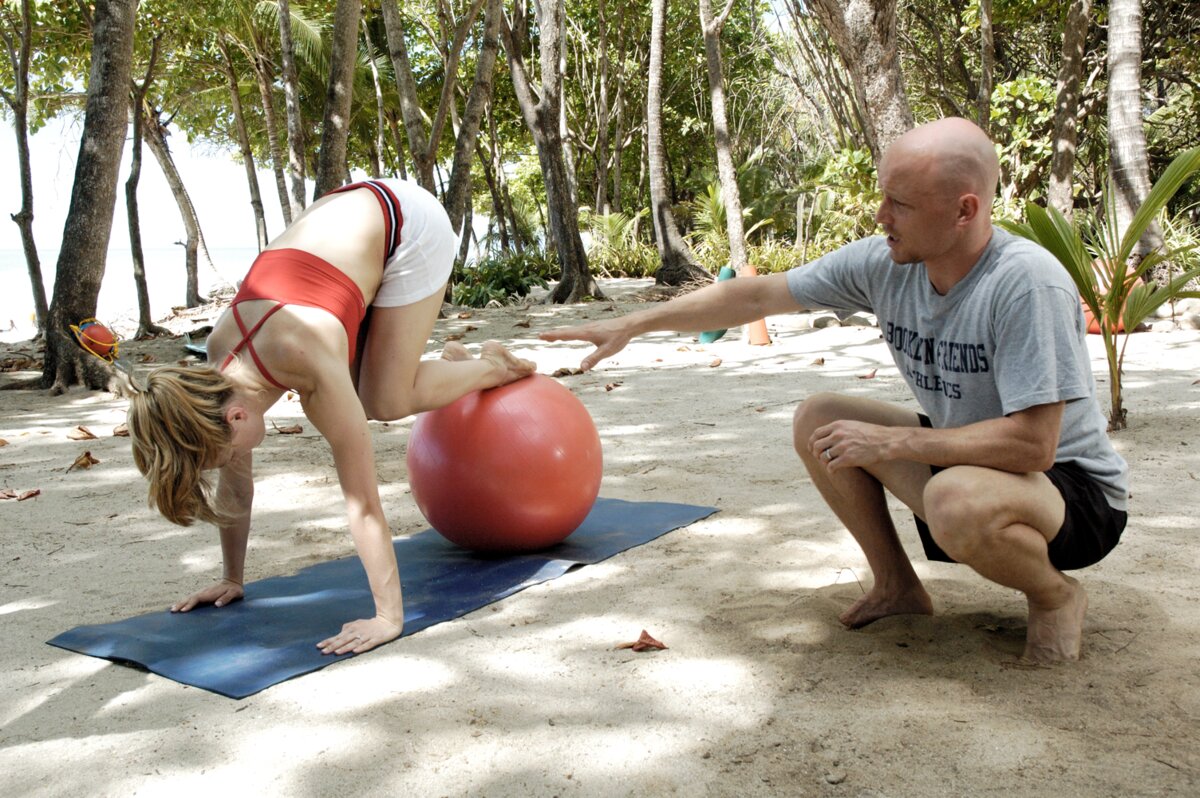
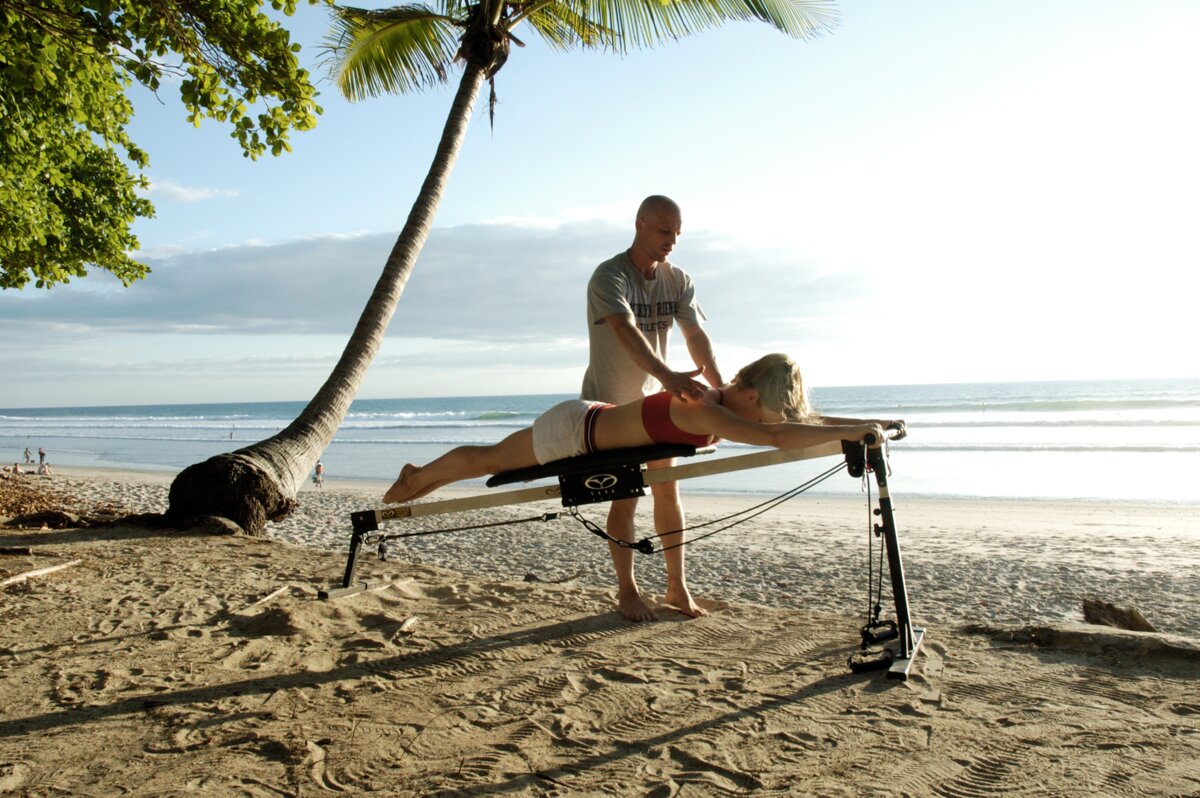
Everyday Athlete's methodology draws from surfing, boxing, climbing, ballet, and more to create workouts that build dynamic, multi-directional athleticism — not just gym strength.
“I train with Tomas 2–3x a week. He keeps my body prepared for whatever I want to do — backcountry skiing, week-long trips remotely on motorbikes, or a weekend soccer game in the park with my 16-year-old son. Since I first walked into his studio 20 years ago, I’ve benefitted from his expertise, focus and ability to make fitness fun, challenging and address my specific movement differences. Our whole family has grown up in his care, and benefitted from his deep coaching knowledge, creativity, and caring.”
— Zeke Freeman
Specialty Programs
Both programs are available as standalone offerings or integrated into an Everyday Athlete® performance training plan. Get in touch to discuss your sport →
Methodology
The EA methodology is authored from 25+ years of applied research and refined through thousands of athlete assessments — individual, team, and institutional. Every program begins with objective data. Every prescription is specific to that athlete's findings. No two prescriptions are the same, because no two athletes have the same data.
Clinical infrastructure — force platform measurement, 3D kinematic analysis, bilateral force profiling, fatigue protocols — is connected to Better Athlete's ongoing monitoring layer. Together they create a living athlete intelligence record. Tomas's role is not to deliver sessions. It is to design the system, author the prescription, and ensure the solution actually serves the athlete or organization it was built for.
Common Questions
The EA assessment is a clinical-grade evaluation of your movement quality, strength asymmetries, mobility, and injury risk factors. Depending on your tier, it includes force platform testing, bilateral force profiling, 3D kinematic analysis, and a sport-specific battery. You leave with objective data — not general advice.
EA starts with a clinical assessment — every program is prescribed from objective data, not from a template. Tomas is not delivering workout sessions. He is authoring your individual prescription: movement correction, strength progressions, recovery programming, and an injury risk management strategy built specifically for your body and your goals.
Most adult athletes train 2–3 sessions per week. Your weekly structure is designed around your work schedule, recovery capacity, and programming phase — not a one-size schedule. Some clients train with Tomas directly; others follow a self-directed program with periodic coaching check-ins.
Absolutely. The Everyday Balance® program was specifically designed for adult athletes who want to perform at a high level without breaking down. Recovery programming, longevity-focused training loads, and BetterAthlete monitoring make it especially effective for athletes managing the demands of life outside sport.
Yes — this is one of the most common starting points. Tomas coordinates directly with your PT or physician, reviews your discharge notes, and authors programming that bridges the gap between rehab and return-to-performance. You are never starting from zero, and you are never guessing what's next.
Sessions are held at multiple locations across New York City and online. Once we're connected, Tomas will identify the right location based on your needs and programming phase. A permanent studio location is coming — details available on your intro call.
Objective reassessment happens at 6–8 weeks — using the same clinical tools as your initial assessment so changes are measurable, not anecdotal. Most athletes notice improved movement quality and reduced pain within the first few weeks. Performance and composition changes take longer and are tracked through BetterAthlete monitoring.
EA is designed for longitudinal partnership, not a single program cycle. That said, it starts with a conversation — there's no pressure to commit before you're clear on whether the fit is right. The best athletes we work with tend to stay for years, because the system keeps getting more valuable the more data it accumulates.
Connected Resources
Daily readiness tracking, training logs, and progress monitoring designed for youth athletes. Track your RISK zone, stay connected with your EA coach, and stay on protocol every day.
Learn More →Clinics, workshops, assessment days, and parent information sessions. See what’s available near you and register your athlete for the next available session.
View Events →Whether you're an individual athlete, a team, or an organization — the first step is understanding your data. Initial consultation is complimentary. The assessment is the foundation of everything EA builds.